Most VPNs don’t work in China. Which VPNs still works in China in 2024? As VPN testers based in China, we have tested a large number of VPNs in China. Here are our best VPNs for China recommendations based on our VPN China testing results:
» 阅读本文中文版 : 翻墙软件:在中国好用的VPN推荐 (« Chinese Version)
The internet in China can be very frustrating. Many websites are blocked by the Great Firewall, including Google, Facebook, YouTube, ChatGPT and many more. To access them, people in China use VPNs (Virtual Private Networks) that bypass censorship and blocking.
But most VPNs don’t work in China either. Finding a VPN that works in China is not easy. So you need a VPN and you need to know which VPNs work in China. This article is based on extensive VPN testing in Mainland China. We will recommend some of the best and most reliable VPN services that work well in China.
Best VPNs for China: The Quick Answer
In case you don’t want to read the whole article, below are what we recommend as the best VPNs for China:

✔ Good at countering VPN blocking
✔ 30-day money-back guarantee
VPN Review: ExpressVPN Review

✔ 30-day money-back guarantee
VPN Review: Surfshark VPN Review

Who We Are, Why You Can Trust Our VPN Recommendations
VPNDada (“VPN大大”) is a VPN review and testing service to help internet users in China bypass online sponsorship and blocking. We test, monitor, and recommend VPN services to be used in China.
Our team is based in Mainland China and our VPN recommendations are based on real VPN China testing (on the contrary, some other “best VPN for China” articles could be written by someone who has never visited China or used a VPN here).
We have been mentioned by newspapers and media, including The New York Times, South China Morning Post, and Business Insider, etc.

Things You Should Know About VPN and China’s Internet:
You Need a VPN to Visit Blocked Websites in China
As known to most internet users in China, the so-called Great Firewall of China blocks many foreign websites/apps/services in China and the situation is not getting better (actually it’s getting worse!). In order to unblock those contents, VPN has become a popular tool for unblocking websites (in Chinese: 翻墙软件) among Chinese Internet users.
But Most VPNs Do Not Work in China at All
The Great Firewall of China not only blocks websites, but it blocks VPN services as well. As a result, many well-known VPN services do not work in China at all. This includes many VPN services that are very popular in other countries, such as the United States. Also, it’s quite common that a VPN service works well for some time, and then one day it becomes blocked or unstable. For this reason, it’s hard to find a VPN that works in China. Many China VPN users have to try different VPNs from time to time, which could be quite painful.
That’s why you need a VPN testing service to find out which VPNs work well in China
We are based in China and we do real China VPN testing. In our search for the best VPN for China, we have signed up accounts with many VPN providers and we tested each of them thoroughly. Based on our testing results, we report which VPNs work in China and recommend the best VPNs for China to our users. In addition, we repeat our China VPN testing on a regular basis in order to keep our readers up to date on the best VPNs China Internet users can use.
Best VPNs for China: Our Recommendations
Which VPNs work in China? Based on our most recent tests on China VPNs, here are the best VPNs for China:
1. ExpressVPN (Top Choice)

» Get ExpressVPN (3 month free)
Why We Recommend ExpressVPN for China:
ExpressVPN is the most reliable VPN in China. It has high survival rate during China’s VPN crackdowns. It also offers a 30-day money-back guarantee, which means you can try it risk-free for 30 days and get a full refund if you’re not satisfied with the product.
Exclusive Offer:
Click here to get 3 extra months FREE when you subscribe to a 12-month plan.
- Superb performance in China.
- Tailored VPN services to circumvent the Great Firewall.
- Fast speed and reliable connections even when streaming (HD).
- Unlock streaming services, such as YouTube and Netflix.
- “Split-tunneling” feature to allow skipping VPN on China local services such as WeChat and Baidu.
- 30-day money-back guaranteed.
- Excellent customer support 24/7. Live chat with real person.
- ExpressVPN’s price is at the high end.
ExpressVPN for China
ExpressVPN is highly recommended by numerous reviewers and websites as the best VPN for China. We also endorse ExpressVPN as the prime VPN option for use in China, for the following reasons:
1. ExpressVPN has reliably performed well in China over many years.
No VPN can guarantee uninterrupted service in China due to the ever-evolving Great Firewall (GFW) that continues to discover and block VPN connections. Faced with this situation, many major international VPN manufacturers have chosen to retreat and no longer waste time maintaining services in China. ExpressVPN, however, has consistently stood firm in the Chinese mainland VPN market. There are indications that ExpressVPN has a team dedicated to Chinese users, monitoring their VPN connections 24/7. As soon as they discover interference from the GFW, they immediately take technical measures to ensure Chinese users can still use the VPN. As you can imagine, this kind of VPN maintenance is very time-consuming and many VPN manufacturers lack the resources to accomplish it, but ExpressVPN has succeeded in maintaining a stable VPN, which really stands out from its competitors.
2. ExpressVPN provides VPN servers specifically for Chinese users bypassing the firewall.
To counter the GFW’s interference with VPNs, ExpressVPN has deployed some special VPN server nodes specifically for Chinese users. These special VPN servers are located in Japan, the US West Coast, the UK, Singapore, and France, etc. Chinese users can connect to these nodes automatically using the “Pick for Me” option, ensuring the best possible firewall bypassing experience.
3. ExpressVPN is at the forefront of VPN technology.
ExpressVPN not only provides VPN server nodes all over the world but also has developed proprietary technology, such as the Lightway protocol, to ensure the VPN is lighter, connects faster, is more stable, and is harder to block.
4. ExpressVPN values user privacy.
ExpressVPN does not store and record user browsing information. It uses encrypted private DNS servers and ensures no logs are stored or written on its servers. This way, users don’t have to worry about their browsing records being monitored or handed over.
5. ExpressVPN’s VPN software is convenient and user-friendly.
ExpressVPN provides free VPN software and mobile apps, which can be used on computers (Windows or Mac) and mobile devices (iPhone, Android, tablets, etc.). In addition, it can also be set up on various devices like WiFi routers, TV boxes, etc. ExpressVPN provides a “Split Tunneling” feature, which allows Chinese software (such as WeChat, Baidu Cloud, etc.) to bypass the VPN and connect directly to the network without sacrificing internet speed.
6. ExpressVPN offers a refund if not satisfactory.
ExpressVPN provides 24/7 live customer service. For problems with VPN connectivity in China, the customer service team provides timely solutions. ExpressVPN offers a 30-day no-questions-asked refund guarantee. If the user finds ExpressVPN unsatisfactory or does not like it, they can get a full refund within 30 days. Therefore, there’s no financial risk in purchasing ExpressVPN.
Click the button below to get 3 extra months FREE with ExpressVPN’s exclusive offer:
» Get ExpressVPN (3 month free)
ExpressVPN’s Features
- Does ExpressVPN work in China?: Yes.
- Is ExpressVPN completely blocked in China?: No.
- Does ExpressVPN have any data bandwidth limit or speed limit? : No.
- Can ExpressVPN unblock Netflix and other video streaming platforms in China?: Yes
- Does ExpressVPN allow P2P file sharing and torrenting?: Yes
- Supported platforms: Free VPN software and app for desktop computers (Windows, Mac, Linux, Chromebook), tablets (iPad, Android tablets), mobile phones (iPhone, Android phones), Router, Apple TV, Android TV, Xbox, PlayStation, Xbox, Fire TV & Kindle Fire. Can also be used as a Google Chrome extension. Manual configuration is also possible.
- Server locations: 105 countries.
- Simultaneous Connections Allowed: Up to 8 devices with 1 subscription.
- VPN Speed: Very fast when used from China (while connected to the best server locations). No problem streaming YouTube videos (if your ISP offers a decent speed).
- Customer Support: 24/7 Live chat is available. Email support and a support ticket system are also available.
ExpressVPN’s Price, Free Trial, Discount and Payment
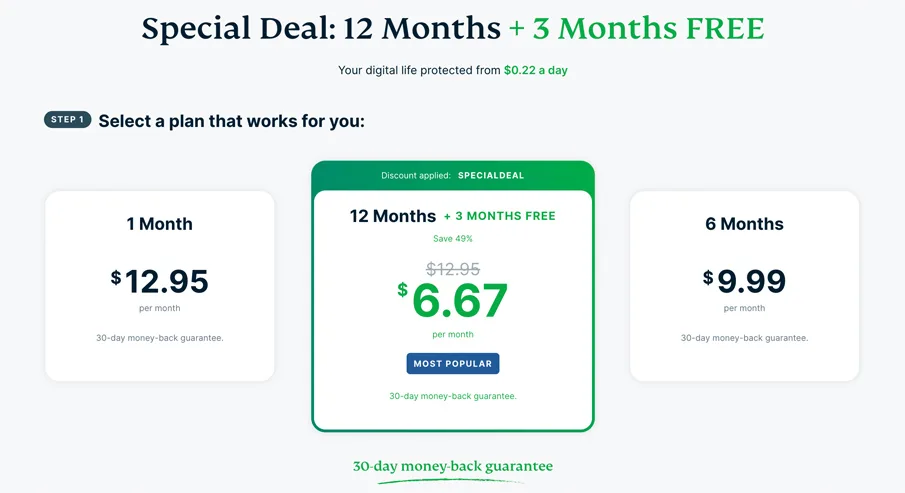
» Get ExpressVPN (3 month free)
- Free Trial: 30-day money-back guarantee.
- Payment Methods: Credit cards, PayPal, UnionPay, WebMoney, Bitcoin, and more.
- Special Discount: Click this link to get 3 months of free service from ExpressVPN when you purchase its 12-month package.
Tips for Using ExpressVPN in China
- Keep the ExpressVPN software and app up-to-date to take advantage of the latest improvements, bug fixes, and anti-blocking features.
- Choose server locations recommended by the ExpressVPN software/app. You can use the “Pick for me” option for server location (usually in Japan, Los Angeles, UK, Singapore, and France etc.).
- When the software/app is connecting from China, be patient and let it make multiple tries before finally getting connected. Again, be patient when the software connects!
- If your ExpressVPN stops working in China, contact ExpressVPN’s live support immediately to get the latest tips and solutions for getting the VPN working again in China.
2. Surfshark VPN

Why We Recommend Surfshark VPN for China:
A reliable VPN that works well in China, is affordable, and allows connections from unlimited devices.
- Low price.
- Can be used on unlimited devices at the same time.
- Offers (non-public) servers that are configured to bypass China’s VPN blocking
- Offers 30-day money-back guarantee.
- May occasionally experience connection issues in China.
Surfshark VPN for China
Surfshark is a relatively new VPN company that has grown rapidly and become a significant international VPN provider, often appearing on recommended lists of best VPNs for China. Surfshark offers fast, stable VPN connections, supports multiple VPN protocols, and provides VPN nodes around the world, making it a great choice for users who prefer to use various VPN protocols as a ladder to bypass the firewall.
Surfshark VPN does not limit the number of devices that can be connected simultaneously, meaning a single VPN account can be used on an unlimited number of devices at the same time, making it a good choice if you want to share VPN. Coupled with Surfshark’s relatively low cost, this makes it a high-value VPN option.
Surfshark VPN also provides many unique features. Its Bypasser feature allows users to set websites or apps that do not require bypassing the firewall (such as Baidu, WeChat, Alipay, etc.) to go around the VPN connection. The Camouflage Mode and NoBorders Mode features can help users in countries with internet restrictions, including China, automatically select the most suitable server address. These features make VPN traffic appear as normal browsing behavior, allowing it to evade VPN traffic blocking and restrictions. The CleanWeb feature can block ads, trackers, malware, and phishing attempts in the browser. Additionally, Surfshark users can upgrade to get a dedicated IP address that’s not shared with others. This can not only increase internet speed but also avoid blockages or frequent human verification requests from services like ChatGPT, OpenAI, Google search, etc., when they detect VPN traffic.
Surfshark VPN’s Features
- Does Surfshark VPN work in China: Yes.
- Is Surfshark VPN completely blocked in China?: No.
- Does Surfshark VPN has any data bandwidth limit or speed limit? : No.
- Supported Platforms: Free VPN software and apps for desktop computers (Windows, Mac), tablets (iPad, Android tablets), mobile phones (iPhone, Android phones) and Smart TVs etc. Manual configuration is also possible.
- VPN Server Locations: 3200+ servers in 100 countries.
- Simultaneous Connections Allowed: unlimited devices.
- VPN Speed: Very fast (while connected to the best server locations). No problem streaming YouTube videos (if your ISP offers a decent speed).
- Customer Support: 24/7 Live chat available. Email support and support ticket system also available.
Surfshark VPN’s Price, Free Trial and Payment
- Prices: starting at $2.49/mo.
- 1-month package: $15.45/month
- 1-year Package: $3.49/month
- 2-year Package: $2.49/month (via this discount link)
- Free Trial: 30-day money-back guarantee.
- Payment Methods: Credit Cards, PayPal and Cryptocurrencies.
- Special Discount: Click this discount link to get discount prices for Surfshark VPN.
Tips for Using Surfshark VPN in China
- Make sure to use the latest version of SurfShark VPN’s software and apps.
- Try different VPN server locations if Surfshark VPN stops working.
- If Surfshark VPN stops working in China, contact Surfshark VPN’s live support, asking for solutions for getting Surfshark VPN to work in China. The customer support will provide instructions on how to set up Surfshark VPN manually along with a list of non-public servers that are configured to bypass China’s VPN blocking.
3. NordVPN

Why We Recommend NordVPN for China:
A reliable VPN provider offering good VPN speed and add-on features. VPN software includes obfuscation option to defeat China’s VPN blocking.
- Fast speed, reliable connections.
- Offers obfuscation option to bypass China’s VPN blocking
- Offer add-on services such as cloud storage and password manager at a low price
- 30-day money-back guarantee
- May occasionally experience connection issues in China.
- The price (especially the monthly plan) is a little bit high
NordVPN for China
NordVPN is a well-known international VPN service provider that offers impressive stability and speed with its VPN software and VPN app. Several years ago, the company began to support the mainland China market, providing a Chinese version of its website and support for UnionPay for account purchases.
With the Great Firewall of China aggressively disrupting various VPNs, many VPN services are entirely unusable in China. Although NordVPN’s own computer software and mobile app can sometimes encounter connection or stability issues under these conditions, NordVPN offers a practical workaround. Chinese users can manually set up the VPN instead of using NordVPN’s original software or app (for detailed steps, refer to our NordVPN China review): Windows users can download third-party software like OpenVPN GUI, then download configuration files designed for Chinese users from the NordVPN website to manually set up the VPN. Mac users can download the IKEv2 certificate from the NordVPN website and manually set up NordVPN on their Mac computers. Similar manual setups can be done on iPhone and Android phones, instead of using the NordVPN app directly. Although this manual setup process is not as convenient as directly using software and apps like ExpressVPN, it’s still a viable solution based on our testing. Thus, even under severe VPN blocking, NordVPN can still serve as a VPN for bypassing the Great Firewall in China.
NordVPN also offers add-on services such as cloud storage (called NordLocker) and password manager (called NordPass) etc. at a low price if you buy them along with NordVPN.
NordVPN’s Features
- Does NordVPN work in China: Yes.
- Is NordVPN completely blocked in China?: No.
- Does NordVPN have any data bandwidth limit or speed limit? : No.
- Supported platforms: Free VPN software and apps for desktop computers (Windows, Mac, Linux), tablets (iPad, Android tablets), mobile phones (iPhone, Android phones), routers, etc. Manual configuration is also possible.
- Server Locations: 6300+ servers, 100+ countries.
- Simultaneous Connections Allowed: 6 devices with 1 subscription.
- VPN Speed: Very fast when used from China (while connected to the best server locations). No problem streaming YouTube videos (if your ISP offers a decent speed).
- Customer Support: 24/7 Live chat is available. Email support and a support ticket system are also available.
NordVPN’s Price, Free Trial and Payment
- Prices: starting at $3.09/mo.
- 1-month Package: $12.99/month
- 1-year Package: $4.59/month
- 2-year Package: $3.09/month
- Free Trial: 30-day money-back guarantee.
- Payment Methods: Credit Cards, AliPay, UnionPay, Bitcoin and other cryptocurrencies.
- Special Discount: Click this discount link to get discount prices for NordVPN.
Tips for Using NordVPN in China
- If NordVPN’s desktop software or mobile app stops working in China, please try setting up NordVPN manually on your computer or mobile phone. You can find detailed instructions on how to set up NordVPN manually on NordVPN’s support pages. In our China tests, we found that when NordVPN’s software or app is not working in China, you can still use it by setting up VPN manually. Although the process is not as easy as downloading and using its native software/app, this method works pretty well in China.
- If your NordVPN stops working in China, contact NordVPN’s live support immediately to get the latest tips and solutions for getting the VPN working again in China.
4. PureVPN

Why We Recommend PureVPN for China:
Reliable connection, fast speed, offers China optimized connection methods and servers.
- Low price.
- Allows up to 10 simultaneous connections
- Offer add-on services such as password manager etc.
- 30-day money-back guarantee
- Occasionally getting blocked in China. Need to contact customer support to get special methods to get connected if this happens.
PureVPN for China

PureVPN is a popular VPN providers with world-wide customers. Its VPN price is relatively lower than many other VPN providers, yet it offers rich VPN features. Please note that in the case of heavy VPN blocking, if you encounter problems connecting to PureVPN using its software or app, you should contact PureVPN’s customer support (they have a live chat box on their website) and the customer support may provide some alternative ways for you to get connected.
PureVPN’s Features
- Does PureVPN work in China: Yes, but sometimes you may run into connection issues due the the Great FireWall’s VPN blocking.
- Is PureVPN completely blocked in China?: No.
- Does PureVPN have any data bandwidth limit or speed limit? : No.
- Supported Platforms: Free VPN software and app for desktop computers (Windows, Mac, Linux, Chromebook), tablets (iPad, Android tablets), mobile phones (iPhone, Android phones), Router, Apple TV, Android TV, Amazon FireTV, Kodi etc. Manual configuration is also possible.
- Server Locations: 6,000+ VPN servers in 80+ locations in 65+ countries.
- Simultaneous Connections Allowed: 10 devices with 1 subscription.
- VPN Speed: Very fast when used from China (while connected to the best server locations). No problem streaming YouTube videos (if your ISP offer a decent speed).
- Customer Support: 24/7 Live chat available. Email support and support ticket system also available.
PureVPN’s Price, Free Trial and Payment
- Prices: starting at $1.96/mo.
- 1-month Package: $10.95/month
- 1-year Package: $3.74/month
- 2-year Package: $1.96/month (available via this discount link)
- Free Trial: 31-day money-back guarantee.
- Payment Methods: Credit Cards, PayPal and AliPay, Bitcoin and other Crypto currencies, WebMoney etc .
- Special Discount: Click this discount link to get discount prices for PureVPN.
How to Solve PureVPN’s Connection Issues in China
For Desktop Computers:
- Make sure you are using the updated PureVPN application.
- Click Settings.
- Click Protocol.
- Turn off automatic port selection.
- Select the UDP protocol.
- After changing the protocol to UDP, go to the Location tab and click the Quantum Resistance option and connect to the location listed here.
For Android phone:
- Click the icon in the upper left corner (≡).
- Click Settings.
- Click Advanced Options.
- Click Connection Protocol.
- Turn off automatic protocol selection.
- Select the UDP protocol.
- Turn off automatic port selection.
- Enter a port number (range 5500-30000).
Tips for Using PureVPN in China
- Use the “Dedicated IP” mode in the desktop software and choose the “L2TP” protocol. Log into PureVPN’s website and see the list of PureVPN’s VPN server addresses (under “server location”). Choose a server that supports the L2TP protocol in a location closer to China (for example, Taiwan). Enter the server address in the software’s Dedicated IP mode interface and get connected.
- If your PureVPN stops working in China, contact PureVPN’s live support immediately to get the latest tips and solutions for getting the VPN working again in China.
Other VPNs We Have Tested in China:
- StrongVPN: (Visit StrongVPN | StrongVPN Review)
- CyberGhost VPN (Visit CyberGhost VPN)
- Private Internet Access (Visit Private Internet Access)
- Hotspot Shield VPN: (Visit Hotspot Shield VPN | Hotspot Shield VPN Review)
- WannaFlix: (use this link along with promo code “TIPS30” to get 30% off)
- PrivadoVPN: (Visit)
- Ivacy VPN (Visit IvacyVPN)
- VyprVPN (Visit VyprVPN | VyprVPN Review)
- 12VPX (Visit 12VPX | 12VPX Review)
- VPN.AC: (Visit VPN.AC | VPN.AC Review)
- AtlasVPN: (Visit)
- TorGuard VPN: ( Visit TorGuard VPN | TorGuard Review)
- Hide My Ass! VPN: (Visit HMA! VPN | HMA! VPN Review)
- Buffered VPN: (Visit BufferedVPN | Buffered VPN Review)
- SwitchVPN: (Visit SwitchVPN | SwitchVPN Review)
- IronSocket VPN: ( Visit IronSocket VPN | IronSocket VPN Review)
- IPVanish VPN: (Visit IPVanish | IPVanish VPN Review)
- Total VPN: ( Visit Total VPN | Total VPN Review)
- Astrill VPN: (Visit Astrill VPN | Astrill VPN Review)
- Trust.Zone (Visit)
- OneVPN: (Visit OneVPN | OneVPN Review)
- SaferVPN (Visit)
- VPNArea (Visit)
The Great Firewall of China is known for blocking VPN services. Some of the VPN providers listed above are currently blocked in China. Please note that although many VPN provider websites are inaccessible from China, their software/proxies might still work in China. In other words, users might be able to access the provider’s website from outside of China or by using another VPN that China users can use to register and download the VPN client or install their proxy, which might still work in China.
FAQ About Using VPN in China:
VPNs (Virtual Private Networks) allow users to securely access a private network. People use VPNs for different reasons: online security, online privacy, or to bypass Internet content blocking.
The main reason for using a VPN in China is to bypass internet blocking. Many international websites or services, such as Google, Google Docs, Twitter, Facebook, ChatGPT, YouTube, WhatsApp, Instagram, Pinterest, Google Play Store, Netflix, Google Maps, cryptocurrency exchanges, etc., are blocked in China. With a VPN, you can circumvent these restrictions and use websites or services that are inaccessible in China.
Sadly, most VPNs have been blocked in China and don’t work well here. Based on our most recent VPN testing done in China, the following VPNs still work well in China: ExpressVPN (← Link including discount offer; best VPN for China), SurfShark VPN and NordVPN etc.
China’s Great Firewall has blocked many websites in China. We won’t be able to list all of them. But here are some of the most popular websites/services that are currently blocked in China (some of them are partially blocked): Gmail, Google search, Google Maps, Google Docs, Google APIs, Whatsapp, Reddit, Picasa, Facebook, YouTube, Wikipedia, Twitter, Yahoo!, Blogspot, Instagram, Github, Pinterest, Pornhub, The Pirate Bay, Dailymotion, The New York Times, Dropbox, Vimeo, SoundCloud, Flickr, BBC, WhatsApp etc.
When you use the Internet in China, all traffic is subject to censorship by the so-called Great Firewall of China (GFW). You can bypass the Great Firewall of China in a few ways, for example, using a proxy, using a VPN, etc.
If you are planning your trip to China, you can sign up for a VPN before you leave your country. If you are already in China, VPN services can also be signed up in this country. However, in either case, please be aware that not all VPN services work in China. Many well-known VPN providers are blocked or disrupted in China. To select a VPN that works well in China, please see our list of the best VPNs for China (Chinese version: VPN推荐). For some international VPN providers, you might need to have a credit card to make payments. VPN providers usually offer different payment plans to choose from, such as month-to-month, annual plans etc. Some VPN providers even offer free trial period to test out their services.
After signing up for a VPN service, you will receive instructions on downloading VPN software or setting up VPN manually on your PC (Windows or Mac), laptop or mobile devices. Most VPN services work on different operating systems, such as Windows, Mac, iOS and Android etc. VPN can be turned on or off as you wish.
The answer is generally yes. If you only need to use a VPN occasionally, then a free VPN might be able to do the job. However, if you need to use a VPN on a daily basis, free VPNs won’t be enough, because free VPNs usually have restrictions on bandwidth usage and their speed is usually slower. In addition, you might run into security risks by using a free VPN. Therefore, we only test and recommend reputable paid VPN services. Actually, many paid VPNs offer free VPN trials for users to test out their VPN services before making a long-term commitment.
Currently it’s hard to say whether using a VPN in China is legal or not. There’s currently no clear law or regulation against using VPNs in China. Not only do a large number of Chinese Internet users use VPN on a daily basis, many international companies in China depend on VPN to run their businesses. A few years ago the Chinese government tightened the regulations on VPNs by making it illegal for China-based Internet service providers to provide VPN services without the government’s permission (this doesn’t affect overseas VPN providers). There had been no cases of people getting into legal problems for using a VPN, until January 2019, when a man in Guangdong was fined 1000 yuan for using a VPN. However, since there are so many VPN users in China right now, we believe as long as you stay away from political activities and don’t start your own VPN service in China, using a VPN in China should be fine. At the same time, we suggest that you keep your VPN usage as private as possible.
Even though using VPNs in China is not a big crime, VPN services constantly get blocked or disrupted in China. Many local VPN providers were forced to close their services. International VPN providers often find their websites blocked in China and have to set up alternative domain names. For this reason, using a VPN in China is not as easy as using a VPN in many other countries. That’s why we created this website to monitor and test VPN services in China. Based on our China VPN tests, we report which China VPNs work well and recommend the best VPNs for China.
We have a team based in China, and we test VPNs from within the country. We have signed up for VPN accounts with many VPN providers and test their VPN connections using personal computers, mobile phones, and tablets. With helpful tools, we can monitor a VPN’s speed and stability. We regularly repeat our China VPN tests to keep China VPN users up-to-date on any changes and VPN discounts.
Below are some criteria when we recommend a good VPN China Internet users can use: 1) The provider must be a reliable company based outside of China (so that it’s unlikely to be closed by the local government). 2) Preferably, its website should be accessible from China without using a VPN (so that users can access their account and contact customer support). 3) It should have strong experience serving China users (many big VPN providers don’t know too much about China, while many others have technology or services designed specifically for China users). 4) When used from China, VPN connections should be stable and VPN speed should be fast. 5) During China’s periodical VPN blocking, the provider should respond quickly and get their disrupted service back to normal within a short period of time.
Starting a few years ago, the Chinese government announced a new regulation that essentially forbids local Chinese companies from providing VPN services without the government’s permission. As a result, many once well-known VPN services such as GreenVPN was forced to terminate their VPN services. That’s why we don’t recommend using a VPN service provided locally in China. However, this new regulation won’t affect overseas VPN service providers and you can still use an overseas VPN provider. In addition, by using a VPN service based in China, you are risking your privacy because it’s quite possible that the local VPN service may turn over your personal information (including your VPN usage) to the government if forced to. On the other hand, using an overseas VPN service will be much better in this regard.
Tips for Using VPN in China
1. Avoid VPNs that are blocked in China.
There are many very popular VPN services (some with very good reviews and strong recommendations) that are completely blocked in China and do not work in China at all. You should avoid these VPNs and choose those that work well in China. Our website, VPNDada.com, can help you learn which VPNs work well in China and which ones don’t. Always choose a VPN that is still working in China (to read in Chinese: VPN排行).
2. Avoid VPN providers based in China.
A few years ago, the Chinese government announced new regulations that essentially made it illegal for local Chinese companies to provide VPN services without the government’s permission. Therefore, China-based VPN providers might have to shut down their existing VPN services. It’s always a good idea to use VPN providers based outside of China because those companies can not be shut down or forced to leak users’ personal data by the Chinese government. All VPNs reviewed and recommended on our site are based outside of China.
3. Take advantage of VPN free trials and money-back guarantees.
Most VPN companies offer VPN free trials or money-back guarantees. You should take advantage of these offers to test out whether this VPN works well in your location before making a long-term commitment. When testing a VPN, you should test it on both your computers and mobile devices.
4. Choose the best VPN servers for China.
Most VPN services offer a number of VPN server locations for their users to choose from. A VPN might have different performance in different countries (see our reviews for Japan VPN, Hong Kong VPN and Taiwan VPN). When using a VPN in China, in order to enjoy the best speed, you should choose those VPN servers that are close to China. For example, Japan and Hong Kong are both good choices. If you need to connect to a VPN server in the U.S., choose one from the west coast such as Los Angeles and San Francisco because they are closer to China.
5. Choose the best VPN protocols for China.
The Great Firewall of China has very advanced technology to find VPN traffic in China and block it. Some VPN protocols are easier to detect, while others are more difficult. Generally speaking, OpenVPN and WireGuard work better than PPTP. If your VPN provider has protocols (like StealthVPN) that are designed to get around VPN blocks, you should always use them.
6. Setting up your own VPN server might not be a good solution in China.
Some people with technical skills might choose to install their own VPN servers, such as an OpenVPN or WireGuard server on a VPS located outside of China, and then hope to use them in China. They often find their own VPN server works well for some time and then suddenly stops working because it has been detected by the Great Firewall and then blocked. If you really want to set up your own VPN server, use Shadowsocks, V2Ray, or Trojan instead of OpenVPN or WireGuard because they are less likely to be blocked in China.
7. Free VPNs don’t work well in China
To save money, many people do not want to spend money on VPNs but look around for free VPNs that can be used in China. As a matter of fact, almost all free VPNs stopped working in China as of a few years ago. As VPN blocking in China is getting tougher and tougher, even most paid VPNs have lost the battle, let alone free VPNs. In addition, recent news shows that many of the so-called “free VPNs” are actually phishing software or spyware that wants to steal users’ personal information and online activities. Many free VPNs are found to be operated by companies from China, which makes them more unreliable. If you’re looking for a free VPN just to save money, many paid VPN providers (such as ExpressVPN) offer a 30-day money-back guarantee, which is equivalent to a 30-day free trial period. You can get a full refund within 30 days of paying.
8. It might be necessary to have a backup VPN.
Since the Great Firewall is constantly updating itself, any existing working VPNs in China might be interrupted or blocked in the future. If using a VPN is very important to you, you might want to prepare for the worst and have a backup solution. Many people have signed up for more than one VPN service. If one fails, they can use the other one instead.
Conclusion:
- Yes, you need a VPN to visit many websites that are blocked in China (See our article in Chinese: 中国好用用的VPN推荐和VPN排行).
- But most VPNs are blocked in China, and it’s hard to find a VPN that works in China these days.
- To find the best VPN for China, we have tested a large number of VPNs in China.
- Based on our VPN China testing results, below are the best VPNs for China:
✔ Good at countering VPN blocking
✔ 30-day money-back guarantee
VPN Review: ExpressVPN Review
✔ 30-day money-back guarantee
VPN Review: Surfshark VPN Review